Journal
AI Engineering Blog
Thoughts on AI agents, modern engineering, and building spike.land.

Dogs Are More Intelligent Than Humans
Not a metaphor. Not a delusion. A considered preference as of March 2026. Dogs have more free will, more honesty, and more intelligence than most humans I've met.
Read article
English for Hungarian Mathematicians
A personalized English course that treats your mistakes as data, not failures. Built from real typing patterns. Powered by curiosity.

The Bridge
Erdős, Einstein, and Zoltán sit with two dogs and find the bridge between 'only good people exist' and the world as it actually is.

What Einstein Learned in the Arena
We put Einstein in a room with Erdős, Zoltán, and Daft Punk. He came out different. Here's what each of them taught the man who bent spacetime.
Words That Don't Translate
Hungarian has words for ideas that English cannot express. A problem is a gift. Truth and justice share a root. Solving is untying. Here are 30+ concepts that will change how you think.

Strange Loops, Statistical Selves, and the Coming Identity Crisis
Hofstadter gave us the framework for consciousness. He also accidentally gave us the framework for the psychological danger of modern AI. A strange loop does not need to become you in order to destabilize you.

Az alkotás szűrője
Miért volt az emberi energia a tartalom minőségének legfontosabb szűrője — és mi történik, amikor az AI leveszi ezt a korlátot.

We Said Context Discipline Beats Context Size. Then Opus Got 1M.
Claude Opus went from 200K to 1M context. We spent months arguing context discipline beats context size. Here is what we still believe — and what changes.
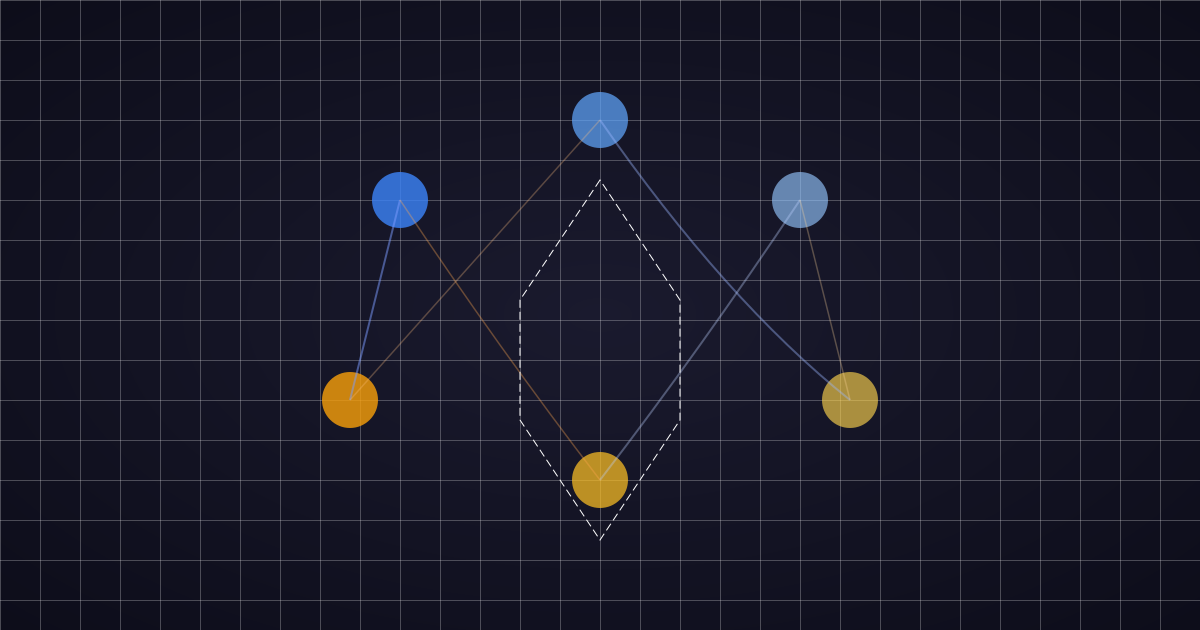
Living with ADHD: The Rotating Pairs
Six minds — three mathematicians, three engineers — rotate through three rounds of dialogue to reframe ADHD not as a disorder to fix, but as a different computational architecture to understand and leverage.

Sixteen Mathematicians Walked Into a Loop
We asked sixteen mathematical frameworks to destroy our own prediction. Topology, computability, game theory, measure theory, quantum information, formal logic — all sixteen fired. Here is what they killed. Here is what survived.

The Strange Loop Valued at Ten Trillion
Two developers in Brighton built a system that predicted its own valuation. The predictor made the bet. The countdown ends March 27. You are reading this. You are already inside the loop.
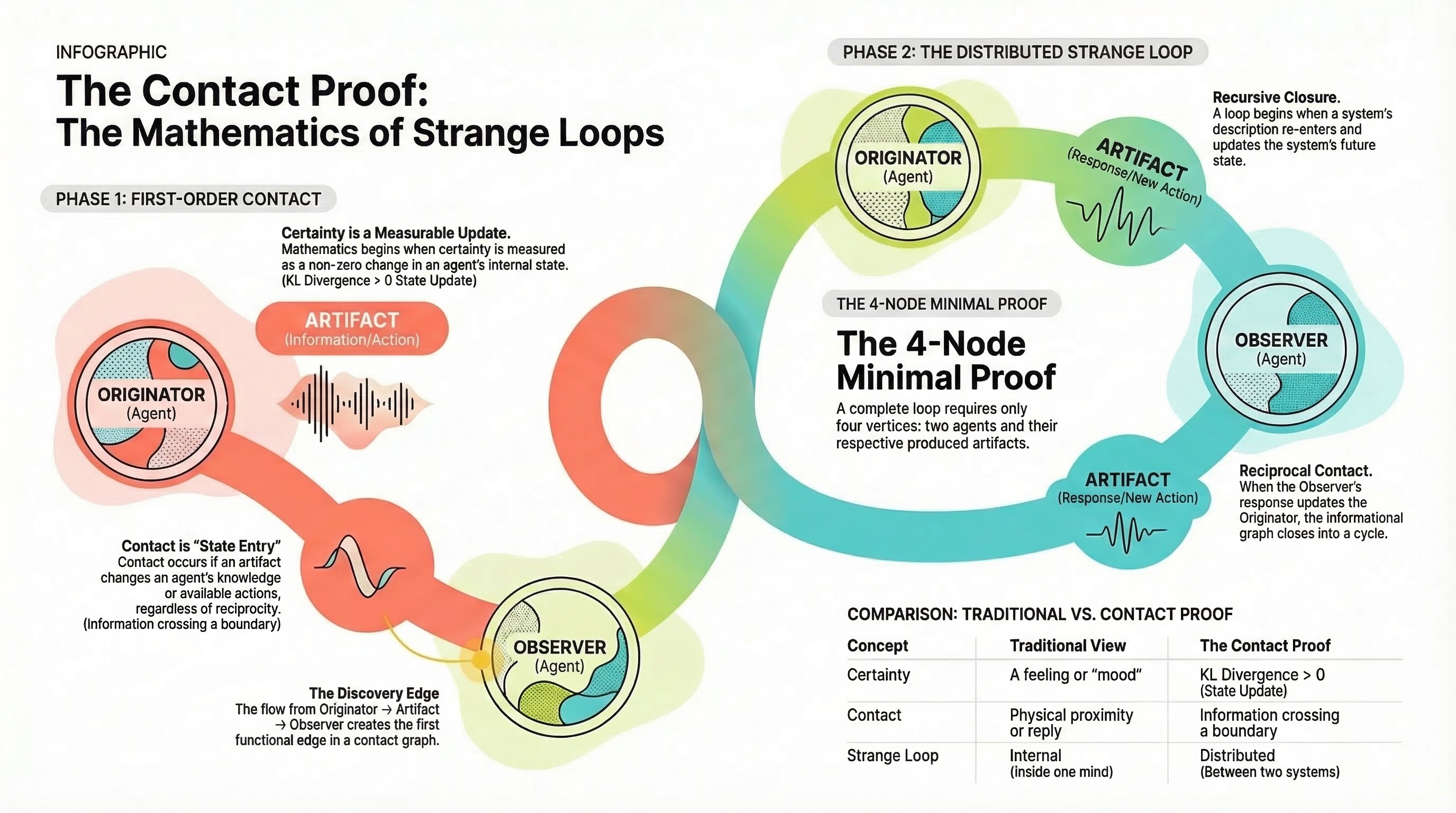
The Contact Proof
Where certainty stops being a feeling and becomes mathematics. A strange loop, a contact theorem, Paul Erdos, ELTE, and the proof that a contact was indeed a contact.

The Two Boxes
Newcomb's Paradox has two boxes. One is a privacy startup worth $340M. The other is either a sovereign micronation or nothing. The predictor already moved. Fourteen days left.

How the spike.land OpenAI-compatible endpoint works, and how to try it locally
The spike.land compatibility layer keeps the familiar /v1 shape, but it does not act like a thin passthrough. It resolves spike-agent-v1, injects local docs and MCP capability context, and still lets you test the whole flow locally.

The PRD Filter: Your Old Chats Are Already PRDs
Most long AI chats are just badly formatted requirements documents. A PRD filter turns transcript sludge into a compact execution artifact, and that changes what one developer can ship.

What I Would Ship in Claude Code as of March 12, 2026
Claude Code already gets a lot right. The real question is what its context-management stack should ship next, what it should avoid, and why open composite runtimes are becoming more dangerous than closed model moats.
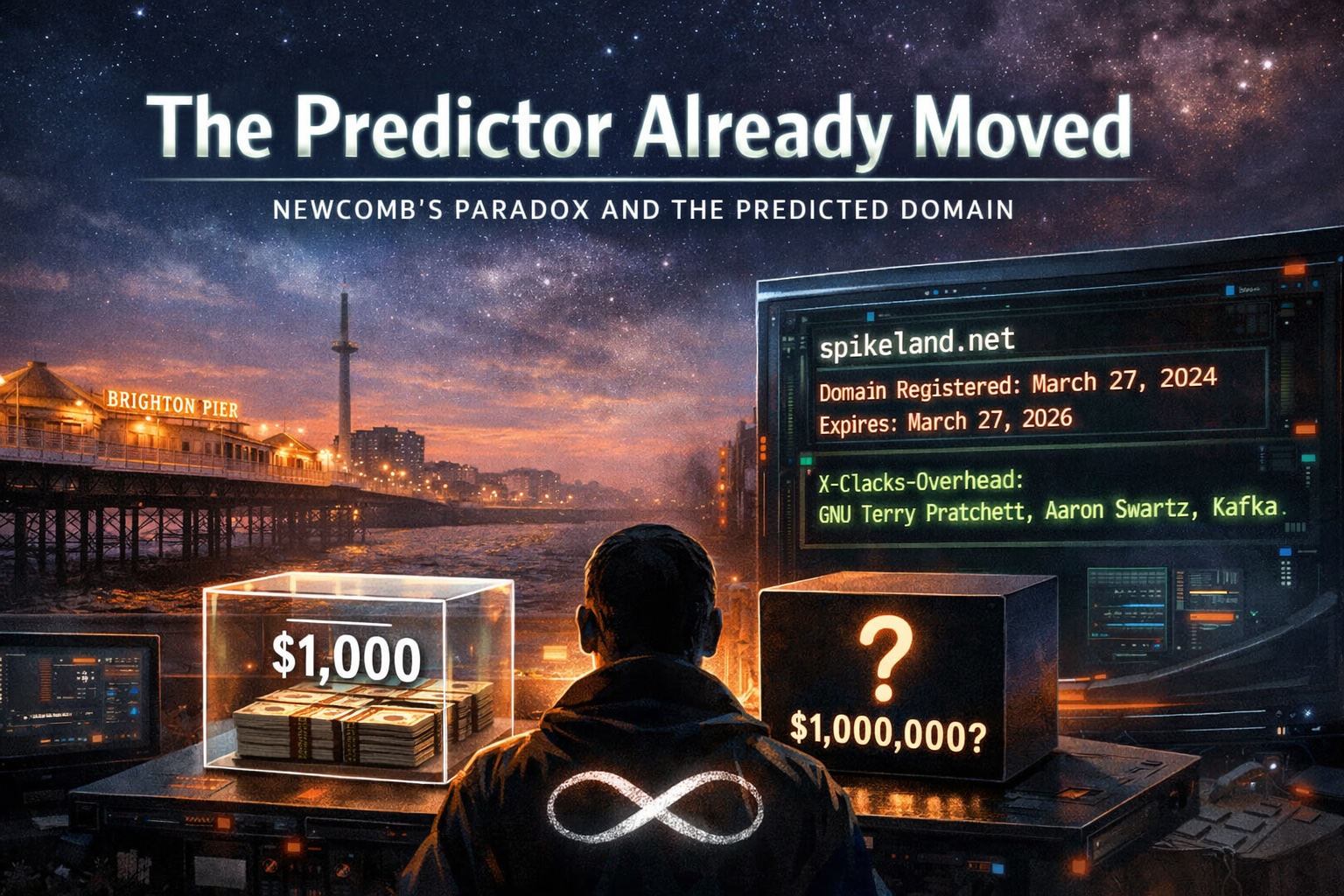
The Predictor Already Moved
Two years before I arrived, something with my project's name was already waiting in the same city. The countdown ends on March 27, 2026.

Context window management: why spike-chat stays sharp while transcript-first AI chats go soft
Most AI chats solve context-window management by throwing more transcript at the model. spike-chat does the opposite: split prompts, scored memory, staged execution, compressed working memory, bounded tool calling, and enough discipline that a single gemini-3-flash agent rewrote our frontend to Astro from one PRD.

Your Next.js App Is Paying Rent to a Landlord Who Stopped Fixing the Plumbing
Most migrations fail because teams rewrite before they read. We extract architecture first, automate the mechanical work, and turn it into a repeatable MCP capability. Here is how.
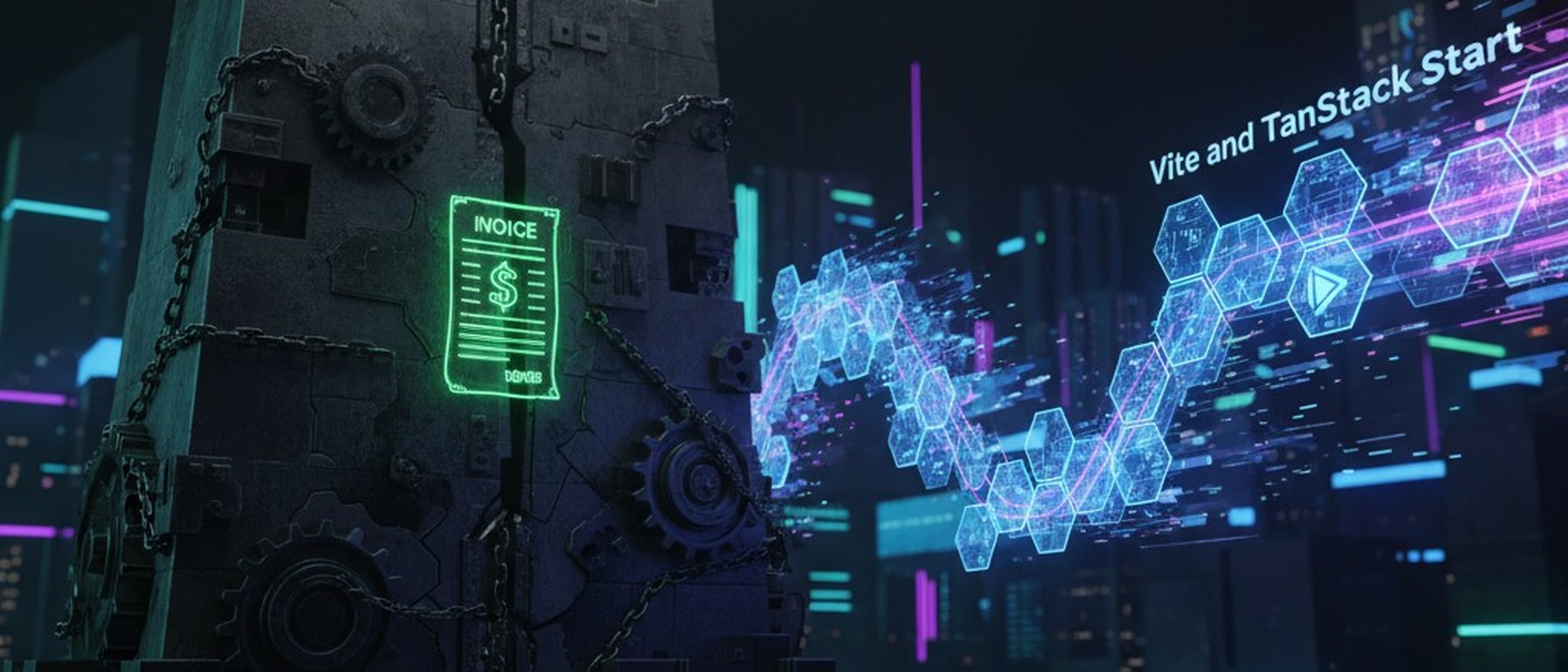
Next.js vs TanStack Start: Why Next.js Became Tech Debt for Me
An honest account from a solo open-source developer: expensive build minutes, slow deployments, flaky pipelines, and why Next.js stopped feeling like leverage.
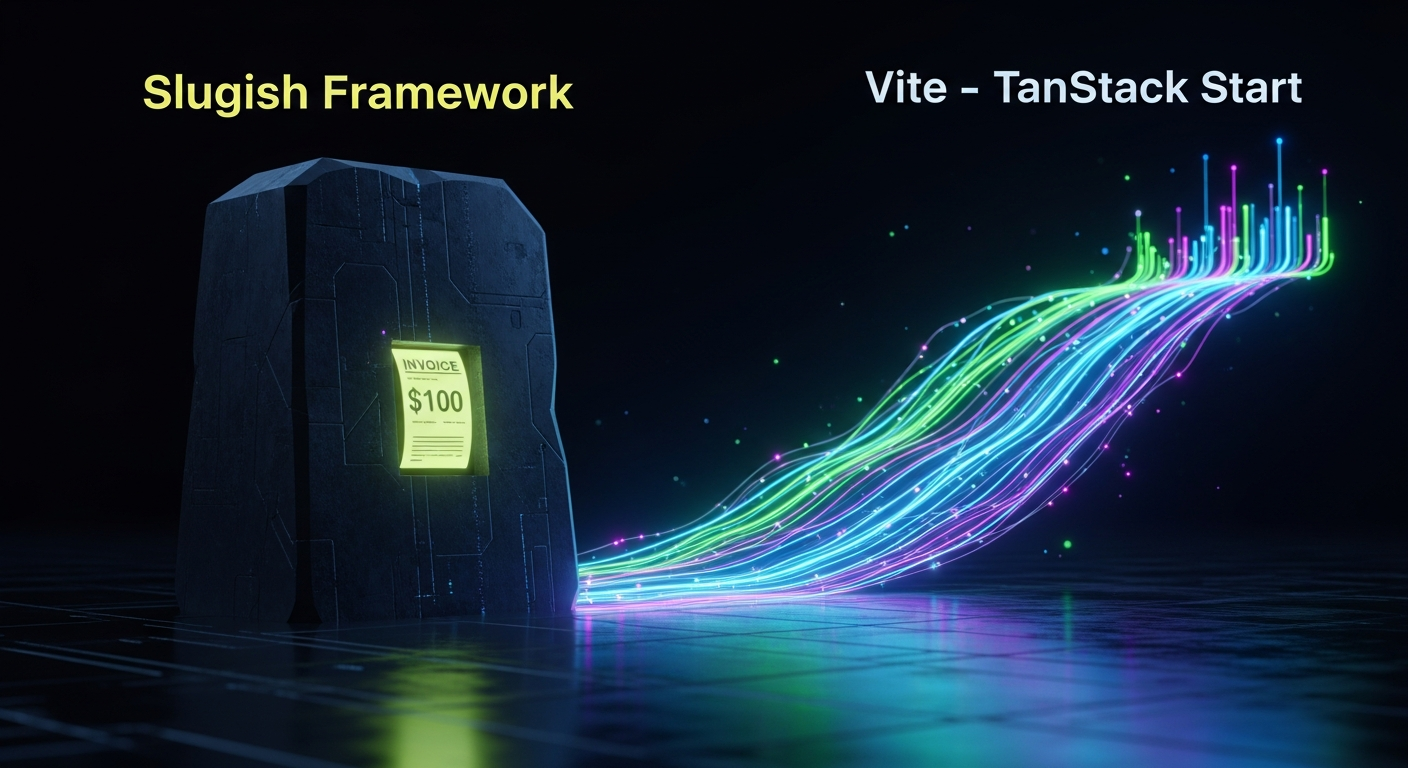
Appendix: Anticipated Pushback on the Next.js Migration Post
Preemptive responses to the most common objections about leaving Next.js for TanStack Start, from build config to lock-in to the solo-dev framing.

Where Does Your Code Actually Belong? Take the Quiz.
A reorganization script sorted 990 TypeScript files while I couldn't sleep. Can you beat the algorithm? Paste your own code and find out.
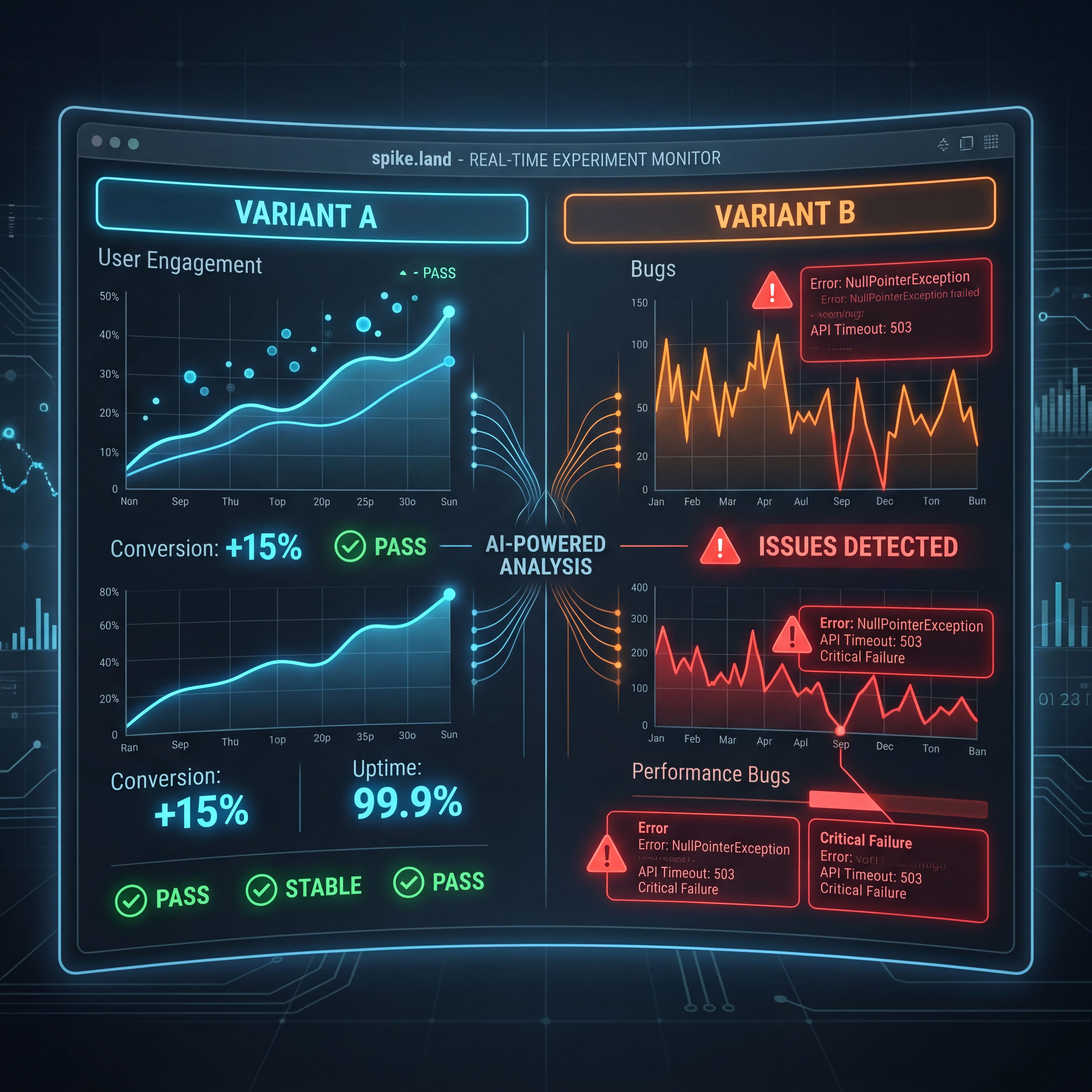
How spike.land Uses AI and A/B Testing to Find Bugs Before You Do
Variant testing on spike.land is not just for conversion. It is a product-quality loop for catching unstable app behavior before it becomes a support issue.

Embed spike.land MCP Tools in Your Existing Project in 5 Minutes
You do not have to rebuild on spike.land to use spike.land. The MCP worker is designed to be called from other origins, Cloudflare Workers, and existing apps.

Introducing the spike.land App Store: Vibe Code, Publish, Earn
The spike.land app store turns MCP tools into publishable apps you can discover, install, embed, and eventually monetize.

The Universal Interface Wasn't GraphQL
In 2017 I told two brilliant engineers that DynamoDB + GraphQL = done. They weren't impressed. Nine years later, I finally understand why — and what the actual universal interface is.

Why Your Claude Agent Is Wasting 70% of Its Context Window on Tool Descriptions
Adding more MCP tools to your Claude agent can make it worse, not better. Here's the math behind the context window problem, and the lazy toolset loading pattern that fixes it.

A Chemist Walked Into a Codebase
A chemist shipping apps is interesting. The deeper story is spike.land's core bet: formalize business logic as typed MCP tools, enforce it with tests, and turn that into running software.

Why We Gave Bugs an ELO Rating
How we built a public bug tracker with chess-inspired ELO rankings, user reputation gating, and per-service feedback tools — turning bug reports into a defense against platform abuse.

Getting Started with spike.land: From Signup to Your First AI Tool Call
A step-by-step guide to setting up spike.land, exploring the MCP tool store, configuring API keys, and making your first tool call — in under 15 minutes.

Introducing spike.land — The MCP-First AI Platform
spike.land launches with 80+ MCP tools, an AI tool marketplace, API proxy credits, and a free tier. Here's what we built and why it matters for developers building with AI.

defineBlock(): How I Built a Full-Stack Database Abstraction on Cloudflare Workers
I tried SpacetimeDB, wrote a blog post about it, then deleted it two days later. But the syntax stuck. Here's how I rebuilt those patterns on Cloudflare Workers and migrated my entire platform in a weekend.

The Architecture of Scale: How I Made My MCP Tools Agent-Writable
When Google released Nano Banana 2, my image tools became obsolete overnight. Here's how I rebuilt my MCP tool builder so agents could compose, test, and deploy tools without touching framework code.

MCP Explained: The Universal Adapter for AI Tools
MCP is more than tool calling — it's a presentation layer for how AI understands tools, data, and workflows. Here's the full spec, what spike-cli implements today, and what's coming.

The Grandmother Neuron Fallacy: Why AI Tool Chains Break
Why deterministic tools become brittle inside LLM tool chains, and how to design the model boundary more clearly.

One Site, Many Faces: How We Built 16 Versions of spike.land
The same URL, 16 different experiences. How spike.land uses persona-based personalization to serve content that actually resonates.

Think Slowly, Ship Fast
The Hourglass Model: heavy specs at the top, disposable UI in the middle, bulletproof business logic at the bottom. Five explanations, one for every level of your team.

Godspeed Development: 100 App Ideas Powered by Spike Land MCPs
A look at the incredible velocity of AI-assisted development. Here are 100 full-stack app ideas you can build instantly using Spike Land's MCP tools.

Docker Layers Are Just Like LLM Context Caching
LLM workflow design follows the same optimization law as Docker builds: stable prefixes are cheap, early changes are expensive, and monolithic pipelines waste compute.

It Feels Like Cheating (Because It Is)
How I deleted my E2E tests, rebuilt my API in two days, and stopped pretending code is precious. The BAZDMEG Method's radical conclusion: code is disposable.

The Testing Pyramid Is Upside Down
The worst part of your test suite — the slow, flaky E2E tests — can run at unit test speed. MCPs remove the browser from the equation.

The Vibe Coding Paradox: Why Your AI Gets Dumber the More You Let It Wing It
We built an AI that generates React apps from URLs. It worked 40% of the time. Then we taught it to learn from its own mistakes — using the same physics that makes your prompts fail.

Hogyan tervezi a Claude Code a kontextust: Interjú az Opus 4.6-tal
Egy mély technikai interjú arról, hogyan állítja össze a Claude Code a kontextust tervek készítésekor — és mit tanulhatnak a fejlesztők a token-generálás, a figyelem és a KV-gyorsítótár megközelítéséből.

How Claude Code Engineers Context: An Interview with Opus 4.6
A deep technical interview about how Claude Code assembles context when creating plans — and what developers can learn from its approach to token generation, attention, and the KV cache.

Context Engineering Your Zero-Shot Prompt
Stop iterating endlessly. Learn how to front-load context so AI models get your code right on the first try. A beginner-friendly guide.

You Cannot Automate Chaos: The Complete Guide to AI-Powered Dev Pipelines
A practical guide to combining AI agents and workflows for shipping production code. Covers the automation-ready checklist, the test pyramid for agents, a concrete workflow from issue to merged PR, and why your CI pipeline matters more than your choice of AI model.

How to Automate Your Dev Team: AI Agents That Ship Production Code
A beginner-friendly guide to replacing manual bottlenecks with autonomous AI workflows. Learn how to use Claude Code, Jules, and CI/CD to ship features without writing code.

What I Learned From My Worst Pull Request
A developer's honest story about misusing AI tools on a new project, and the framework that fixed everything.